
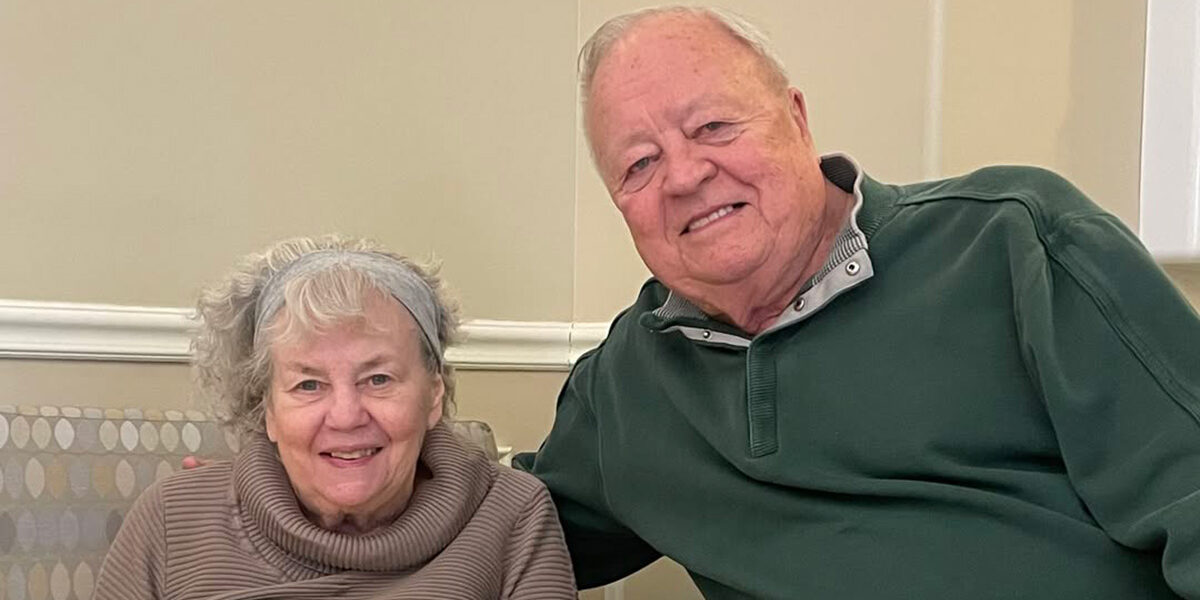
At Encore Memory Care at South Barrington in South Barrington, Illinois, Deanna and her husband, Chuck, marked 59 years of marriage together. Nearly six decades of shared routines, family traditions, and quiet evenings together. Now, their story looks different — but it is no less meaningful.
Chuck visits Deanna every single day. On their anniversary, he arrived with a bouquet, honoring the life they have built together. For families caring for a spouse with dementia, moments like this offer reassurance: even when memory changes, love remains steady.
What Happens When One Spouse Needs Memory Care?
For many couples, this chapter begins gradually. A forgotten appointment. Repeated questions. Confusion that lingers longer than it used to.
According to the Alzheimer’s Association, more than 6 million Americans are living with Alzheimer’s disease, and many are cared for by a spouse. When one spouse needs memory care, the relationship often shifts from partnership to full-time caregiving.
That shift can bring:
- Physical exhaustion
- Emotional strain
- Interrupted sleep
- Feelings of guilt or isolation
What once felt like a shared life can begin to feel like constant supervision.
From Caregiver Back to Spouse
When families begin asking what to do when one spouse needs memory care, they are often searching for more than medical support. They are searching for balance.
At Encore Memory Care at South Barrington, structured routines, trained team members, and a secure setting allow spouses to return to being spouses.
Instead of managing medications or monitoring safety concerns, partners can focus on:
- Sitting together over coffee
- Holding hands during visits
- Celebrating anniversaries
- Sharing stories from decades past
For Chuck, daily visits are no longer about caregiving tasks. They are about companionship.
My Spouse Has Dementia: What Now?
When someone says, “My spouse has dementia,” it often carries fear and responsibility. The National Institute on Aging describes Alzheimer’s disease as a progressive brain disorder that worsens over time, gradually affecting memory, thinking, and daily functioning.
For many husbands and wives, caregiving becomes a 24-hour role. Choosing to move a spouse to memory care does not mean stepping away from love. It means sharing the caregiving load with professionals trained specifically in supporting seniors with dementia.
At Encore Memory Care at South Barrington, families often tell us that once care responsibilities are supported by our team, visits feel different. Lighter. More focused. More present.
Preserving the Marriage, Even as Memory Changes
One of the greatest fears couples face when one spouse needs memory care is the possibility of separation. But memory care is not the end of a relationship. In many cases, it protects it.
In a secure, structured community:
- Daily routines are guided by trained associates
- Personalized care plans adjust as needs change
- Spouses can visit freely and consistently
- Medical coordination and oversight are built into daily life
This structure allows partners to step out of constant crisis management and back into connection. For Deanna and Chuck, that connection looks like flowers on an anniversary. It looks like daily visits. It looks like 59 years of history honored, even as memory evolves.
Supporting Couples in South Barrington, Illinois
Families in South Barrington, Illinois, and the surrounding northwest suburbs often seek memory care when caregiving at home is no longer sustainable.
Encore Memory Care at South Barrington focuses exclusively on supporting seniors with Alzheimer’s and other forms of dementia. Our team understands that when dementia affects one spouse, it affects both.
That is why we guide families through:
- Personalized care planning
- Ongoing communication
- Structured daily engagement
- Support for the caregiving spouse
Because when dementia touches a marriage, both partners deserve support.
Frequently Asked Questions When One Spouse Needs Memory Care
Start by speaking with a physician and assessing daily care needs. If supervision or hands-on support is becoming constant, consider memory care.
Memory care provides structured support and trained team members who handle daily care needs, allowing spouses to focus on time together instead of caregiving tasks.
Memory care is designed to provide consistent support as dementia progresses. Care plans are personalized and reviewed regularly.
Yes. Spouses and family members are encouraged to visit and remain actively involved.
Final Thoughts
When one spouse needs memory care, it can feel like the ground is shifting beneath you.
But love does not disappear with memory loss. It adapts.
For some couples, the greatest gift of memory care is not only professional support for the spouse living with dementia. It is the restoration of partnership — the ability to sit together again without the full weight of caregiving. For Chuck, it means arriving each day simply as her husband, not her caregiver.
Memory Care at Encore Memory Care at South Barrington
Encore Memory Care at South Barrington in South Barrington, Illinois, provides structured memory support, secure living, and compassionate guidance for couples navigating dementia. Schedule a tour to learn more about our approach and discuss your family’s next steps. Contact us today.